
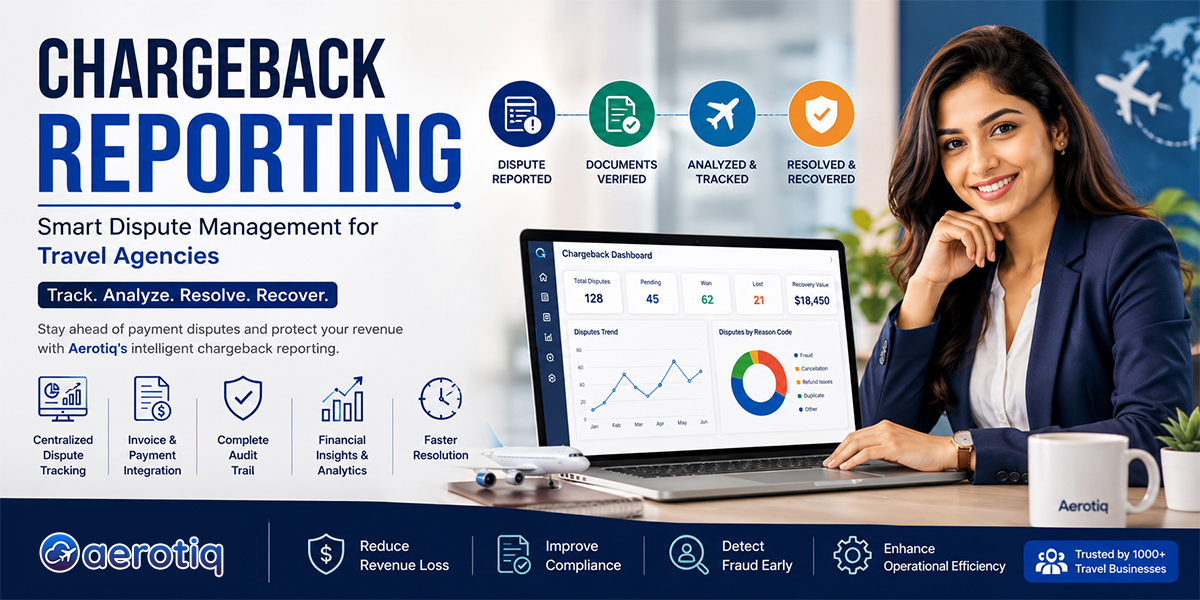
The travel industry processes thousands of transactions every day, from airline tickets and hotel reservations to holiday packages and ancillary services. While digital payments have made booking faster and more convenient, they have also increased the number of payment disputes and chargebacks. Whether a customer disputes a flight booking, claims unauthorized card usage, or requests a refund through their bank instead of the travel agency, managing chargebacks efficiently has become essential.
Without a proper system, chargebacks can lead to revenue loss, operational delays, and strained relationships with payment providers. This is where Aerotiq Chargeback Reporting helps travel agencies stay in control.
Aerotiq's AI-powered travel technology platform includes Chargeback Reporting as part of its Finance & Compliance module, allowing agencies to monitor disputes, track their status, maintain supporting documentation, and gain better visibility into payment-related risks all from a centralized dashboard.
What Is Chargeback Reporting?
Chargeback reporting is the process of recording, monitoring, and analyzing payment disputes initiated by customers through their credit card issuer or bank. Instead of manually searching through invoices and booking records, businesses can access detailed reports that provide insights into every disputed transaction.
A chargeback report typically includes:
· Booking reference or transaction ID
· Customer information
· Payment date
· Dispute date
· Chargeback amount
· Reason code
· Current dispute status
· Supporting documents
· Resolution history
These reports help finance teams resolve disputes faster while identifying trends that can reduce future chargebacks.
Why Chargeback Reporting Matters for Travel Agencies
Travel bookings often involve multiple suppliers, payment gateways, fare rules, cancellation policies, and refund timelines. This complexity increases the likelihood of disputes.
Some common reasons include:
· Flight cancellations
· Schedule changes
· Refund delays
· Duplicate payments
· Unauthorized card usage
· Customer misunderstanding of cancellation policies
· Friendly fraud
Without proper reporting, agencies may miss response deadlines or fail to provide sufficient evidence, resulting in avoidable financial losses.
How Aerotiq Chargeback Reporting Helps
Aerotiq provides an integrated Finance & Compliance module designed specifically for travel businesses. Instead of using multiple disconnected systems, agencies can manage payment disputes alongside bookings, invoices, and operational data from one platform.
Key capabilities include:
Centralized Dispute Tracking
View all chargebacks from one dashboard with real-time status updates.
Booking Integration
Every dispute is linked directly to the corresponding booking, making it easy to retrieve passenger details, invoices, and payment records.
Invoice Management
Since Aerotiq also manages invoice creation and tracking, finance teams can quickly verify payment history when responding to disputes.
Complete Audit Trail
Maintain records of:
· Customer communication
· Booking confirmations
· Payment receipts
· Refund requests
· Supplier invoices
· Internal notes
This documentation strengthens responses during the chargeback process.
Financial Visibility
Monitor:
· Total disputed amount
· Pending disputes
· Won cases
· Lost cases
· Recovery value
· Monthly chargeback trends
These insights help businesses improve cash flow and reduce payment risks.
Benefits of Aerotiq Chargeback Reporting
Faster Resolution
Access all booking and payment details instantly without searching through multiple systems.
Lower Revenue Loss
Respond to disputes more quickly with complete supporting documentation.
Better Fraud Detection
Identify recurring fraud patterns and suspicious booking activity before they become larger issues.
Improved Financial Reporting
Generate reports that help management understand dispute volumes, recovery rates, and financial impact.
Operational Efficiency
Finance, operations, and customer support teams work from the same centralized data, reducing manual effort.
Essential Metrics to Monitor
An effective chargeback reporting process should include:
· Chargeback ratio
· Total disputed transactions
· Chargeback value
· Win rate
· Recovery rate
· Fraud-related disputes
· Refund processing time
· Average dispute resolution time
Tracking these KPIs helps agencies improve operational performance over time.
Best Practices for Managing Chargebacks
Travel businesses can significantly reduce disputes by following a few best practices:
· Provide clear cancellation and refund policies.
· Use recognizable billing descriptors.
· Send instant booking confirmations.
· Maintain accurate customer communication.
· Store invoices and booking records securely.
· Respond to disputes before issuer deadlines.
· Monitor chargeback reports regularly.
· Review dispute trends by supplier, destination, or payment gateway.
Why Modern Travel Businesses Need Chargeback Reporting
As payment volumes continue to grow, manual dispute management becomes increasingly difficult. Modern travel businesses require automation, centralized reporting and real-time visibility to protect revenue and maintain operational efficiency.
Aerotiq combines chargeback reporting with booking management, invoicing, CRM, lead management, AI-powered workflows, and analytics, giving travel agencies a single platform to manage both operations and finance. The platform also supports access to 600+ airline partnerships, 50+ suppliers, AI-driven automation, and enterprise-grade reporting tools.
Conclusion
Chargeback reporting is no longer just a finance function it's an essential part of running a successful travel business. By tracking disputes, maintaining accurate documentation and analyzing payment trends, agencies can reduce financial losses, improve customer service, and strengthen compliance.
With Aerotiq Chargeback Reporting travel agencies gain a centralized solution for managing payment disputes alongside bookings, invoices, and customer operations. The result is faster dispute resolution, improved visibility and a more resilient financial process that supports long-term business growth.