
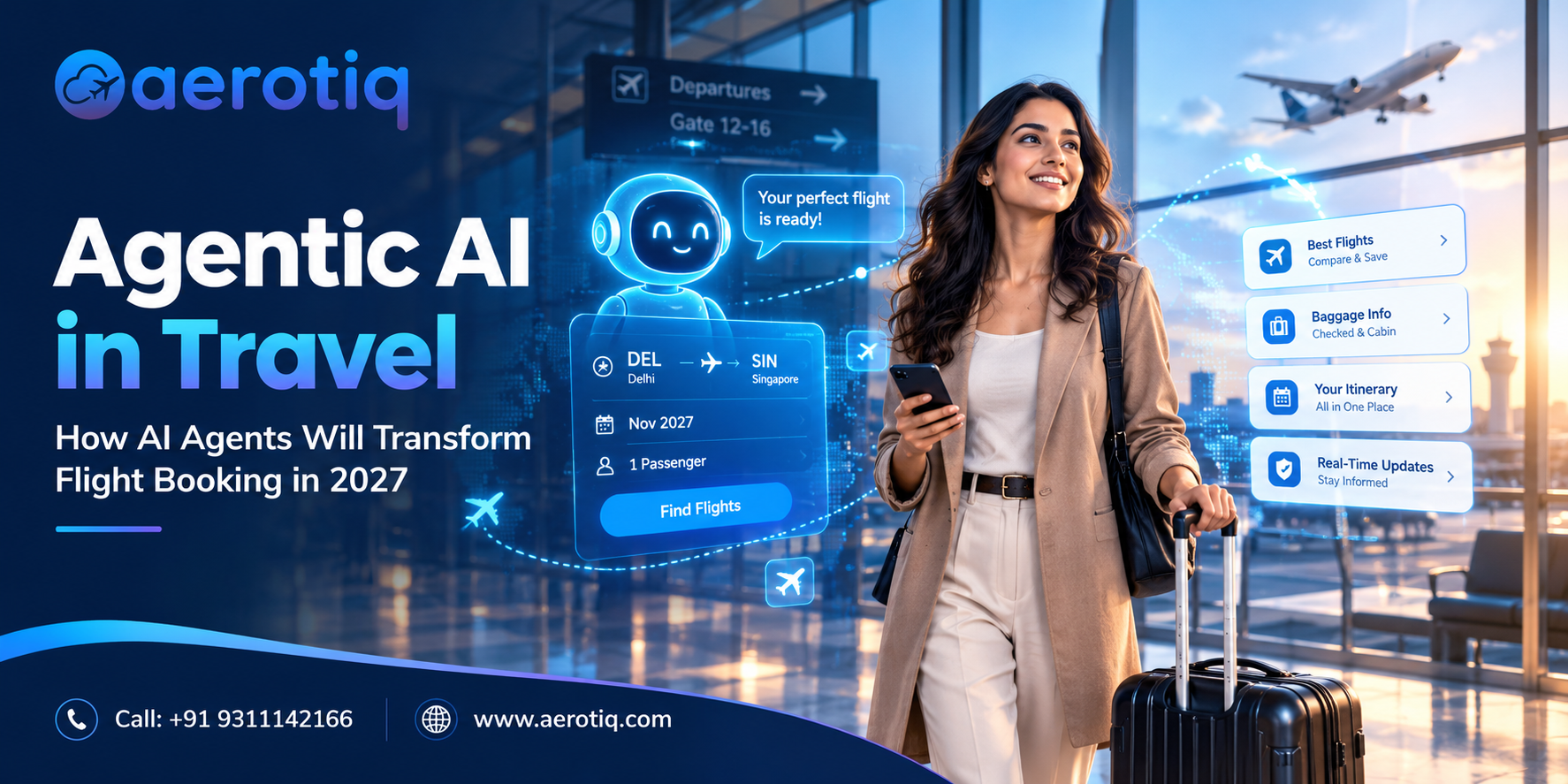
The travel industry is entering a new era of digital transformation. From searching for affordable flights to managing complete travel itineraries, artificial intelligence is changing how people plan their journeys. In 2027, one of the most exciting developments will be the growing role of Agentic AI in Travel, which can help travelers move beyond traditional search engines and experience a smarter, more personalized flight booking process.
Unlike conventional AI tools that mainly answer questions or provide recommendations, AI agents can understand goals, evaluate different options, and perform multiple tasks with appropriate user permission. For example, a traveler could ask an AI agent to find the best flight for a business trip, compare ticket prices, check baggage policies, and prepare a booking for approval.
As this technology develops, airlines, online travel agencies, and travel technology companies will have new opportunities to improve customer experiences and simplify flight reservations.
What Is Agentic AI in Travel?
Agentic AI in Travel refers to the use of AI systems that can work toward a traveler's goal by planning steps, gathering information, evaluating choices, and taking permitted actions.
Traditional booking platforms usually require customers to enter destinations, select travel dates, apply filters, compare fares, and complete several booking steps manually. Agentic AI aims to make this process more convenient by coordinating these activities through a conversational interface.
For example, a traveler might say, "Find me a round-trip flight from Delhi to Singapore in November, with one checked bag, a short layover, and a reasonable price."
An AI agent could interpret these preferences, search available options through connected services, compare relevant flight details, and present suitable recommendations. Depending on its integrations and permissions, it may also help complete the reservation after the traveler confirms the final choice.
The goal is simple: less time spent searching and more time enjoying the travel experience.
How AI Agents Will Transform Flight Booking in 2027
1. Personalized Flight Recommendations
Every traveler has different priorities. Some want the lowest possible fare, while others prefer direct flights, flexible tickets, convenient departure times, or additional baggage allowance.
In 2027, AI agents are expected to make flight recommendations increasingly personalized by considering travelers' stated preferences, trip requirements, and authorized travel history.
For example, if a customer regularly chooses morning flights and avoids long layovers, an AI agent could prioritize similar options for future journeys.
This approach can make flight discovery faster and more relevant. Instead of browsing dozens of results, travelers could receive a shorter list of flights that better match their needs.
2. Smarter Flight Price Comparison
Flight prices can change depending on demand, availability, travel dates, and airline pricing strategies. Comparing different options manually can be time-consuming, particularly when travelers have flexible schedules.
Agentic AI can help compare fares across connected booking platforms and airline systems, where available. It can evaluate more than the headline ticket price by considering baggage fees, seat selection, refund conditions, and other relevant costs.
For instance, a cheaper flight may become less attractive when baggage and additional charges are included. An AI agent can highlight these differences and help travelers make better-informed decisions.
Some systems may also support fare monitoring and price alerts. However, AI cannot guarantee that a ticket will become cheaper or predict every fare change accurately.
3. Conversational and Convenient Booking
One of the biggest changes will be the way travelers interact with booking platforms.
Instead of navigating multiple pages, customers may increasingly use natural language to explain their travel requirements. The AI agent can ask follow-up questions when important details are missing and refine its recommendations as preferences change.
For example, a traveler could request a flight from Mumbai to London and later add, "I need extra baggage and want to arrive before noon."
The agent could update its search and show options that better match the revised requirements.
This conversational experience can reduce friction for first-time travelers, busy professionals, families, and customers who find complex booking interfaces difficult to use.
4. Automated Travel Planning and Booking Support
Agentic AI will not be limited to finding flights. Connected AI agents may help coordinate several activities within a single travel planning process.
These tasks could include comparing flight options, checking airport transfer availability, reviewing hotel choices, organizing booking information, and preparing an itinerary.
For business travelers, an AI agent could help identify flights that fit company travel policies. For families, it could prioritize convenient schedules and suitable connections.
However, actual booking, payment, ticket issuance, and changes depend on the systems connected to the agent. Travelers should retain control over important decisions, especially before payment or ticket confirmation.
5. Real-Time Flight Updates and Disruption Management
Flight delays, cancellations, and schedule changes can disrupt even a carefully planned journey.
With access to reliable, current airline and airport data, AI agents could help monitor flight updates and explain the available options when disruptions occur.
For example, if a flight is cancelled, an agent might identify alternative flights, compare arrival times, and help the traveler understand the applicable airline policies.
Where supported, it could prepare a rebooking request or assist with the change after receiving permission.
This capability could make travel management more proactive. Instead of searching for solutions during a stressful situation, passengers may receive timely guidance through their preferred digital channel.
6. Better Customer Support for Airlines and Travel Agencies
Travel businesses handle many repetitive customer questions about baggage allowances, booking confirmations, cancellation policies, refunds, and flight schedules.
AI agents can help answer routine questions, retrieve relevant booking information through authorized systems, and guide customers through standard processes.
When a request involves unusual circumstances or requires human judgment, the agent should be able to transfer the conversation to a support professional with the relevant context.
For airlines and travel agencies, this could reduce repetitive workloads, improve response times, and allow human teams to focus on complex customer needs.
Benefits of Agentic AI in Travel for Businesses and Travelers
The adoption of Agentic AI in Travel could deliver several important benefits.
For travelers:
- Faster flight searches and easier comparisons.
- More personalized recommendations.
- Greater visibility into total trip costs.
- Convenient assistance with itinerary planning.
- Timely support during travel disruptions.
For airlines and travel companies:
- More efficient customer service operations.
- Better use of customer preferences, with appropriate consent.
- Opportunities to improve conversion rates through relevant recommendations.
- Reduced manual effort in selected booking workflows.
- More consistent support across digital channels.
The actual benefits will depend on the quality of the AI system, its data sources, integrations, and implementation.
Challenges and Risks of Agentic AI in Flight Booking
Although the technology offers significant potential, businesses must address important challenges before relying on autonomous booking workflows.
Data privacy: Travel bookings involve personal information, including passenger names, contact details, and sometimes passport information. Companies must protect this data and use it responsibly.
Accuracy and reliability: AI agents may misunderstand requirements or provide incorrect information. Flight details, baggage rules, visa requirements, and fare conditions must be verified through reliable sources.
Payment security: Booking and payment actions should require appropriate authorization. AI agents should not make significant purchases without clear user consent.
Integration challenges: Different airlines and booking platforms use different systems. Connecting these services reliably can require substantial technical work.
Human oversight: Travelers need clear ways to review recommendations, correct mistakes, approve purchases, and contact human support when necessary.
Addressing these concerns will be essential for building customer trust and encouraging wider adoption.
The Future of Flight Booking with Agentic AI in 2027
By 2027, Agentic AI in Travel could become an important part of the digital booking experience. Travelers may increasingly expect technology to understand their requirements, compare suitable options, and help coordinate travel arrangements with fewer manual steps.
For travel businesses, the opportunity extends beyond automation. Companies can build more helpful customer experiences by combining AI capabilities with accurate flight inventory, transparent pricing, secure payment systems, and dependable customer support.
However, adoption will not happen equally across every platform. Some services may initially offer AI-powered recommendations and conversational search, while more advanced systems may support booking changes and other actions through connected integrations.
The most successful solutions will likely combine intelligent automation with transparency, reliable information, and human control.
Agentic AI in Travel has the potential to reshape how people search for, compare, and book flights in 2027. By understanding traveler preferences, simplifying price comparisons, supporting itinerary planning, and assisting with flight disruptions, AI agents could make the booking journey more convenient and personalized.
For airlines, online travel agencies, and travel technology providers, this is an opportunity to rethink traditional booking experiences and deliver greater value to customers.
As the technology evolves, the future of flight booking will not simply be about finding a ticket. It will be about creating a smarter, more connected, and more customer-focused travel experience.
Businesses that invest in reliable AI integrations, data protection, and user trust will be better positioned to benefit from this transformation.
The next generation of flight booking is taking shape, and Agentic AI could play a major role in defining how travelers plan their journeys.